Showing posts with label communications. Show all posts

Tuesday, January 10, 2017

How Do Air Pollution Alerts Affect Public Health Use?

Effects of an air pollution personal alert system on health service usage in a high-risk general population: a quasi-experimental study using linked data (7 page pdf, R A Lyons, S E Rodgers, S Thomas, R Bailey, H Brunt, D Thayer, J Bidmead, B A Evans, P Harold, M Hooper, H Snooks, J Epidemiol Community Health, May 23, 2016)

Today we review an analysis of the reaction of an “intervention” group of patients with air pollution- related illnesses (cardio-respiratory and COPD) to alerts produced by the UK’s airAware alert system over a two year period, as measured by visits to hospital emergency departments, compared to a control group which were not similarly afflicted. Results indicate a doubling of emergency admissions and four times the number of respiratory conditions for the intervention group compared to the control group. The authors conclude that some health interventions or alerts beyond a certain distribution level are harmful in terms of health service utilisation.

 . air-alerts  

Key Quotes:

“The airAware system was a novel development because it integrated near real-time data rather than forecasting. Its design facilitated early identification of local air pollution problems and issued timely warnings of air pollution episodes reflecting levels of particulate matter (measured as particulate matter 10 μm or less in diameter”

“The number of messages per day was limited to three; on any single day no more than three alerts could be issued. Only one alert was issued for the day unless a higher pollution trigger level was met during the daily alerting period.”

“The intervention group experienced a doubling of emergency admissions for all relevant conditions and a fourfold admissions increase for respiratory conditions”

 “Our findings raise questions about the trade off between harms and benefits of air pollution alerting services. .. There is a growing evidence base demonstrating some public health interventions are harmful. Wider roll-out of such systems does not appear to be warranted given the current evidence base.“

Tuesday, September 8, 2015

How Does the Wording of a Poll Affect Response to Risks from Climate Change?

The impacts of political cues and practical information on climate change decisions (11 page pdf, Gabrielle Wong-Parodi and Baruch Fischhoff, Environmental Research Letters, Feb. 26, 2015)

Also discussed here: ‘Global Warming’’ or ‘‘Climate Change’’? Whether The Planet Is Warming Depends on Question Wording (10 Page pdf, Jonathon P. Schuldt, Sara H. Konrath & Norbert Schwarz, Public Opinion Quarterly, Feb. 21, 2011)

And here: Surging Seas Risk Finder (Sea level rise analysis, Climate Central)

Today we review research into the effectiveness of calls to the public for action on climate change and how this is influenced by how the threat is labeled: climate change or global warming. Participants were given a situation where they were to buy a house on a coastal city in southeaster USA, Savanna, which is vulnerable to flooding. They were asked to consider the elevation of the site as well as a second independent factor, climate change and given a Risk Finder tool to quantify the risk from flooding. Earlier polls concluded that 7% more people believe in “climate change” than “global warming”, probably because the latter is more easily refuted using local cold spells. More Democrats than Republicans are believers in the sense that they saw a greater risk from climate impacts. Posing a prior question as to their climate belief tended to neutralize the response compared with not posing it beforehand, suggesting that the flooding issue could be addressed on factual grounds without involving political motivation. The authors conclude by suggesting that polls “focus on facts that people need, while avoiding terms that divide them”.


savanna flood zone

 Key Quotes:

“An analysis of web sites of conservative and liberal think tanks suggests that conservatives prefer to use the term ‘‘global warming’’ whereas liberals prefer ‘‘climate change.’”

“74.0% of respondents endorsed a value of 5 or above (implying that they believed the phenomenon to be real) when the question referred to ‘‘climate change.’’ Only 67.7% did so when it referred to ‘‘global warming,’’

 “ ‘global warming' entails a directional prediction of rising temperatures that is easily discredited by any cold spell, whereas ‘‘climate change’’ lacks a directional commitment and easily accommodates unusual weather of any kind.”

 “we examine how two manipulations, designed to heighten the salience of political identity related to global warming, affect responses to a realistic (although still hypothetical) decision: buying a home in an area subject to storm surges, potentially affected by sea-level rise”

“They saw greater risk, as expressed in their reduced willingness to move to a flood-prone area, when flood insurance was unavailable, when global warming was mentioned, and when they could learn more about flooding risks using the Risk Finder decision aid. “

“political debates, focusing on public policies (e.g., carbon tax, cap-and-trade), have only weak implications for personal decisions”

“nonbelievers [in global warming] see the probability of global warming as high enough to affect home purchases, even if it is not high enough to affect public policies (which might also be opposed on other grounds)”

“for communicators interested in informed decision making, the recommendation emerging from these results is to focus on facts that people need, while avoiding terms that divide them.”

Wednesday, April 9, 2014

Polling the Public about Air Pollution

Air Quality in London Survey(Transport for London, Mar. 2014)

Today we review a dozen questions that the Mayor Johnston has posed to his citizens about the state of air pollution London which recently reached record levels, comparable to those in the capital of China. Action to improve air quality (or other environmental issues such as climate change) from the public purse has to be based on how tax payers perceive the problem and its sources, as well as which options they might accept or hopefully endorse. Londoners are lucky to have Mayors who care enough about the environment to take significant steps to improve it, as we have seen in the implementation of the Low Emissions Zone, using a congestion charging system in the core of London over 10 years ago. What comes next? We’ll see after the poll closes in mid-April.

 London AQ Map  

Key Quotes:

“What do you think are the causes of air pollution in London? (please tick as many as you feel appropriate)
Yes No Don't know
Road traffic Yes No Don't know
River traffic Yes No Don't know
Aviation Yes No Don't know
Trains Yes No Don't know
Construction (e.g. building sites) Yes No Don't know
Industry (e.g. manufacturing) Yes No Don't know
Domestic (home heating) Yes No Don't know
Weather Yes No Don't know
“ Do you agree to reduce pollution from traffic we should:
Yes No Don't know
Encourage people to walk and cycle more Yes No Don't know
Encourage people to reduce their private car use Yes No Don't know
Encourage people to reduce their use of all vehicles (including taxis and buses) Yes No Don't know
Encourage people to travel at different times of the day to reduce congestion Yes No Don't know
Encourage more people to work from home Yes No Don't know
Encourage people to use cleaner fuelled vehicles Yes No Don't know
Encourage people to use vehicles powered by alternative fuels and / or alternative technologies Yes No Don't know
Enhanced by Zemanta

Monday, March 24, 2014

Marketing the Environment


Amanda Little
Amanda Little (Photo credit: ChimpLearnGood)
Want everyone else to buy into environmentalism? Never say “Earth” ( Heather Smith, Grist, Mar. 12, 2014)

Also discussed here: No, we’re not “environmentalists.” It’s more complicated than that


Key Quotes: 

 “People working in the nonprofit world sometimes have trouble adopting a marketing mindset....But in the end, the goal is for people to ‘buy’ our ideas — ideas for a better world.”” 

“If you look at the budgets of environmental groups, only teeny tiny portions are spent on communications. And if you remove the portions spent on building membership and fundraising, it’s even less….foundations that support environmental groups don’t tend to value communications, either.” 

“in communications, only simplicity works. Our side doesn’t like simplicity because they view it as manipulative or not capturing the truth. Without simplicity, people don’t remember anything.”

 “too much of the public thinks that environmentalists are people who care about the environment and not about people. So the environment has become a thing apart.” 

“we think because we’ve said something, know something, or done something, that everybody else knows it. We don’t realize the bubble we live in. It’s only when you’ve said something so many times that you’re utterly and completely sick of it that someone has even heard it.”
Enhanced by Zemanta

Friday, February 7, 2014

Is Denying Climate Change Like Suppressing Health Risks?

States that have declared GHG mitigation strat...
States that have declared GHG mitigation strategies or hold action plans (Photo credit: Wikipedia)
Is Learning about Climate Change like Having a Colonoscopy? (5 page pdf, Richard C. J. Somerville, Earth's Future, Dec. 16, 2013) 

Readers of this blog know that it focuses on the links between urban pollution and health. Today we review a short article that addresses the challenge of communicating the facts of climate change and why so many people seem to want to avoid knowing that or even deny that it exists. The article observed that the same reaction is found when some people are faced with the hard realities of medical disease, especially ones that end in death such as heart attacks and cancer. Further, a poll revealed that over half (55%) of those responding did not want to know about their risk to disease because of their fear of knowing the answer, a phenomenon called “health information avoidance”. But most of those who did want to know the risks (82%) also wanted to know the options available to deal with the disease. Turning to communicating climate change, the author reasoned that a little priming of the pump by providing more about policy options could produce more understanding and support for those policies and less climate change information avoidance and denial. 

Let’s hope.


Key Quotes: 

“consider those people who are strongly opposed to certain kinds of government actions, such as imposition of new taxes (e. g., carbon taxes) and interference in free markets (e. g., cap-and-trade systems). If those people were to find out that these are exactly the government actions that might well be undertaken, then perhaps they would just rather not know about climate change” 

“In thinking about communicating climate change science, it is always important to distinguish between scientific results and policy choices. The physical science of climate change is policy-neutral, and two people who understand and accept the same scientific findings may easily differ on the policy options, for which scientific input is important, but values and priorities and economic and political considerations also play key roles.” 

“We may discover that encouraging people to be thoughtful and analytical about their feelings and beliefs can help them to be more receptive to learning about the findings of climate change science.”
Enhanced by Zemanta

Monday, June 3, 2013

The Significant Role of Public Participation in Urban Sustainability Issues

Who Governs in Cities: Business Interests or Public Advocacy for Sustainability?(21 page pdf, Jeffrey M. Berry and Kent E. Portney, Sustainability, May7, 2013)
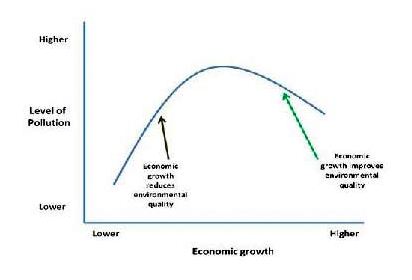
Today we review an analysis of the way that 50 cities in the USA performs in terms of economic growth and sustainability and the role of public advocacy and business groups in their governance. It concludes that economic growth is a necessary condition to allow for the inclusion of the public input in developing sustainable urban policies in cities such as Portland or Seattle. As a side note, the article points out the striking difference in the roles of public and business advocacy at the national vs the local level- and the difference this makes in how cities are governed.
sustainability curve
Key Quotes:
“the scale of city-level politics affects interest group advocacy is to step away from the seemingly logical assumption that urban lobbying is generally a smaller version of Washington lobbying. The critical difference is that city politics is characterized by low barriers to entry.. 80 percent of leaders of neighborhood groups have their phone calls to city hall ―almost always or ―usually returned”
Three hypotheses:
  • “Cities with greater the inclusion of environmental groups in their policymaking processes will be more likely to aggressively pursue sustainability policies and programs than cities where there is lesser inclusion of environmental groups.”
  • “Cities with greater inclusion of both business groups and environmental groups in their policymaking processes will be more likely to aggressively pursue sustainability policies and programs than cities where there is lesser inclusion of business and environmental groups.”
  • “Cities with greater growth in per capita income will be more likely to exhibit greater inclusion of environmental groups in policy deliberations than cities with lesser growth in per capita income. “
“the degree to which large U.S. cities decide to adopt and implement sustainability policies seems to be strongly related to whether environmental groups are included in city policy making processes, even controlling for inclusion of business groups and businesses and the ideology of policymakers”
“the inclusion of environmental groups appears very strongly related to the robustness of the local economy, notably how much economic growth the city has experienced.”
“this current analysis provides prima facie evidence that, at least for the fifty studied cities, the inclusion of environmental groups matters, and there is a strong possibility that the strength and activity of such environmental groups may well be the product of economic development, very much in line with what might be predicted by the Environmental Kuznets Curve.”
Enhanced by Zemanta

Wednesday, May 8, 2013

How Well do Heat Wave Warnings Work?

U.S. Heat Wave and Earth’s Energy Balance
U.S. Heat Wave and Earth’s Energy Balance (Photo credit: NASA Goddard Photo and Video)
 Are heat warning systems effective?(10 page pdf, Ghasem (Sam) Toloo, Gerard FitzGerald, Peter Aitken, Kenneth Verrall and Shilu Tong, Environmental Health, Apr. 5, 2013) 

Today we review an analyses of a number of case studies or reports on the effectiveness and cost of “heat warning systems” (HWS) or “heat health warning systems” (HHWS). Those studies which had cost benefit estimates showed that having an effective warning system more than pays for itself. Further, the main factor that prompted the public to take action was the perceived threat of a heat wave which would encourage agencies responsible for public warnings (such as the national meteorological service) to improve how they communicate the warnings. Underlining the need to improve heat warning is the greater frequency of heat waves, as climate warming proceeds, especially in large cities where there may be twice or triple the number experienced now. 

Key Quotes: 

“Heatwaves kill thousands of people around the world each year. In addition, more adverse health conditions including heat-related illnesses (e.g., heat stroke, dehydration, acute myocardial infarction) and heat exacerbated illnesses (e.g., renal disease, ischaemic heart disease and mental health disorders) are associated with heatwaves” 

 “With higher frequency of heatwaves projected to occur as a result of climate change [12], locally tailored action plans are implemented in many affected areas to minimize harm to those most at risk.” 

“One study also estimated the costs of running heat warning systems at US$210,000 compared to the US$468 million benefits of saving 117 lives.” 

“Perceived threat of heat dangers emerged as the main factor related to heeding the warnings and taking proper actions.”
Enhanced by Zemanta